Erin's Journals

Monday, October 12, 2020

Just a thought… Gratitude changes the pangs of memory into a tranquil joy. [German theologian and Lutheran pastor Dietrich Bonhoeffer] 

Hello and Happy Monday! I hope that your Thanksgiving weekend is going well or, if you’re reading this on a later date, that you’ve been blessed with leftovers. We still have streamers and balloons up, a lovely reminder of the birthday/Thanksgiving celebration yesterday – a day that was supposed to be spent hosting guests on a riverboat cruise of the Rhine, but which saw us at home with our precious family, with nowhere in the world we would rather be.

I found an article that I just had to share with you today. It’s not only timely but timeless and if you’ll sit with a cup of your favourite comfort and take a moment to read this, I think you’ll be, well, grateful.

Robert A. Emmons, Ph.D., is (according to his bio) the world’s leading scientific expert on gratitude. He’s an author and professor of psychology at UC Davis, and founding editor-in-chief of The Journal of Positive Psychology. So let’s just say he knows whereof he writes.

He wrote a piece that I stumbled across while seeking quotes to use on social media regarding gratitude. Posted in 2013, it set off many bells for these times in which we live today and for our everyday lives pre- and post-COVID. The essay is adapted from this book:
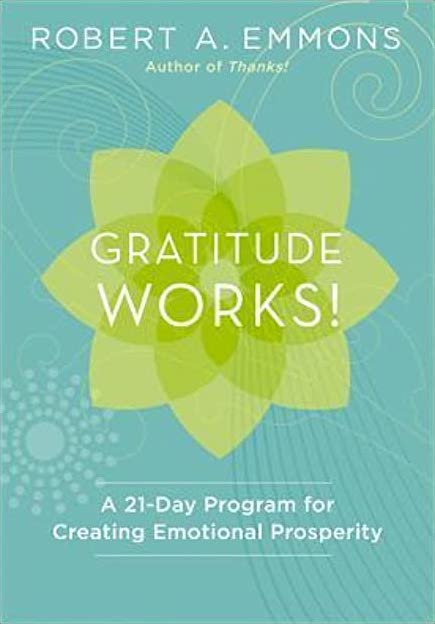
It’s about the distinction between feeling grateful and being grateful; how trials and suffering (reframing the crisis and remembering the bad) can deepen that gratefulness. There are a few small exercises, like confronting one’s own mortality. How to recast gratefully negative moments/events from your past.

I’ll be studying this carefully before making my next keynote speech; in fact, there’s even a video link to an eight minute chat by Dr. Emmons. I was going to cherrypick highlights from this piece for you, but it’s so good that I couldn’t. Instead, I’m going to copy it for you to read here yourself. I promise you it’s worth your time and you may want to copy and share the link. And please feel free to comment on what you’ve read at my Facebook page.

I’ll be back with you on Thursday with some lovely moments from a week of happy tears and marking years, of skating and soaring – and life, never boring! And I promise it won’t all rhyme. Happy Thanksgiving.

How Gratitude Can Help You Through Hard Times

It’s easy to feel grateful when life is good, says Robert Emmons. But when disaster strikes, gratitude is worth the effort.

A decade’s worth of research on gratitude has shown me that when life is going well, gratitude allows us to celebrate and magnify the goodness. But what about when life goes badly? In the midst of the economic maelstrom that has gripped our country, I have often been asked if people can—or even should—feel grateful under such dire circumstances.

My response is that not only will a grateful attitude help—it is essential. In fact, it is precisely under crisis conditions when we have the most to gain by a grateful perspective on life. In the face of demoralization, gratitude has the power to energize. In the face of brokenness, gratitude has the power to heal. In the face of despair, gratitude has the power to bring hope. In other words, gratitude can help us cope with hard times.
 
Don’t get me wrong. I am not suggesting that gratitude will come easily or naturally in a crisis. It’s easy to feel grateful for the good things. No one “feels” grateful that he or she has lost a job or a home or good health or has taken a devastating hit on his or her retirement portfolio.
 
But it is vital to make a distinction between feeling grateful and being grateful. We don’t have total control over our emotions. We cannot easily will ourselves to feel grateful, less depressed, or happy. Feelings follow from the way we look at the world, thoughts we have about the way things are, the way things should be, and the distance between these two points.
 
But being grateful is a choice, a prevailing attitude that endures and is relatively immune to the gains and losses that flow in and out of our lives. When disaster strikes, gratitude provides a perspective from which we can view life in its entirety and not be overwhelmed by temporary circumstances. Yes, this perspective is hard to achieve—but my research says it is worth the effort.
 
Remember the bad
 
Trials and suffering can actually refine and deepen gratefulness if we allow them to show us not to take things for granted. Our national holiday of gratitude, Thanksgiving, was born and grew out of hard times. The first Thanksgiving took place after nearly half the pilgrims died from a rough winter and year. It became a national holiday in 1863 in the middle of the Civil War and was moved to its current date in the 1930s following the Depression.
 
Why? Well, when times are good, people take prosperity for granted and begin to believe that they are invulnerable. In times of uncertainty, though, people realize how powerless they are to control their own destiny. If you begin to see that everything you have, everything you have counted on, may be taken away, it becomes much harder to take it for granted.
 
So crisis can make us more grateful—but research says gratitude also helps us cope with crisis. Consciously cultivating an attitude of gratitude builds up a sort of psychological immune system that can cushion us when we fall. There is scientific evidence that grateful people are more resilient to stress, whether minor everyday hassles or major personal upheavals. The contrast between suffering and redemption serves as the basis for one of my tips for practicing gratitude: remember the bad.
 
It works this way: Think of the worst times in your life, your sorrows, your losses, your sadness—and then remember that here you are, able to remember them, that you made it through the worst times of your life, you got through the trauma, you got through the trial, you endured the temptation, you survived the bad relationship, you’re making your way out of the dark. Remember the bad things, then look to see where you are now.
 
This process of remembering how difficult life used to be and how far we have come sets up an explicit contrast that is fertile ground for gratefulness. Our minds think in terms of counterfactuals—mental comparisons we make between the way things are and how things might have been different. Contrasting the present with negative times in the past can make us feel happier (or at least less unhappy) and enhance our overall sense of well-being. This opens the door to coping gratefully.
 
Try this little exercise. First, think about one of the unhappiest events you have experienced. How often do you find yourself thinking about this event today? Does the contrast with the present make you feel grateful and pleased? Do you realize your current life situation is not as bad as it could be? Try to realize and appreciate just how much better your life is now. The point is not to ignore or forget the past but to develop a fruitful frame of reference in the present from which to view experiences and events.
 
There’s another way to foster gratitude: confront your own mortality. In a recent study, researchers asked participants to imagine a scenario where they are trapped in a burning high rise, overcome by smoke, and killed. This resulted in a substantial increase in gratitude levels, as researchers discovered when they compared this group to two control conditions who were not compelled to imagine their own deaths.
 
In these ways, remembering the bad can help us to appreciate the good. As the German theologian and Lutheran pastor Dietrich Bonhoeffer once said, “Gratitude changes the pangs of memory into a tranquil joy.” We know that gratitude enhances happiness, but why? Gratitude maximizes happiness in multiple ways, and one reason is that it helps us reframe memories of unpleasant events in a way that decreases their unpleasant emotional impact. This implies that grateful coping entails looking for positive consequences of negative events. For example, grateful coping might involve seeing how a stressful event has shaped who we are today and has prompted us to reevaluate what is really important in life.
 
Reframing disaster
 
To say that gratitude is a helpful strategy to handle hurt feelings does not mean that we should try to ignore or deny suffering and pain.
 
The field of positive psychology has at times been criticized for failing to acknowledge the value of negative emotions. Barbara Held of Bowdoin College in Maine, for example, contends that positive psychology has been too negative about negativity and too positive about positivity. To deny that life has its share of disappointments, frustrations, losses, hurts, setbacks, and sadness would be unrealistic and untenable. Life is suffering. No amount of positive thinking exercises will change this truth.
 
So telling people simply to buck up, count their blessings, and remember how much they still have to be grateful for can certainly do much harm. Processing a life experience through a grateful lens does not mean denying negativity. It is not a form of superficial happiology. Instead, it means realizing the power you have to transform an obstacle into an opportunity. It means reframing a loss into a potential gain, recasting negativity into positive channels for gratitude.
 
A growing body of research has examined how grateful recasting works. In a study conducted at Eastern Washington University, participants were randomly assigned to one of three writing groups that would recall and report on an unpleasant open memory—a loss, a betrayal, victimization, or some other personally upsetting experience. The first group wrote for 20 minutes on issues that were irrelevant to their open memory. The second wrote about their experience pertaining to their open memory.
 
Researchers asked the third group to focus on the positive aspects of a difficult experience—and discover what about it might now make them feel grateful. Results showed that they demonstrated more closure and less unpleasant emotional impact than participants who just wrote about the experience without being prompted to see ways it might be redeemed with gratitude. Participants were never told not to think about the negative aspects of the experience or to deny or ignore the pain. Moreover, participants who found reasons to be grateful demonstrated fewer intrusive memories, such as wondering why it happened, whether it could have been prevented, or if they believed they caused it to happen. Thinking gratefully, this study showed, can help heal troubling memories and in a sense redeem them—a result echoed in many other studies.
 
Some years ago, I asked people with debilitating physical illnesses to compose a narrative concerning a time when they felt a deep sense of gratitude to someone or for something. I asked them to let themselves re-create that experience in their minds so that they could feel the emotions as if they had transported themselves back in time to the event itself. I also had them reflect on what they felt in that situation and how they expressed those feelings. In the face of progressive diseases, people often find life extremely challenging, painful, and frustrating. I wondered whether it would even be possible for them to find anything to be grateful about. For many of them, life revolved around visits to the pain clinic and pharmacy. I would not have been at all surprised if resentment overshadowed gratefulness.
 
As it turned out, most respondents had trouble settling on a specific instance—they simply had so much in their lives that they were grateful for. I was struck by the profound depth of feeling that they conveyed in their essays, and by the apparent life-transforming power of gratitude in many of their lives.
 
It was evident from reading these narrative accounts that (1) gratitude can be an overwhelmingly intense feeling, (2) gratitude for gifts that others easily overlook most can be the most powerful and frequent form of thankfulness, and (3) gratitude can be chosen in spite of one’s situation or circumstances. I was also struck by the redemptive twist that occurred in nearly half of these narratives: out of something bad (suffering, adversity, affliction) came something good (new life or new opportunities) for which the person felt profoundly grateful.
 
If you are troubled by an open memory or a past unpleasant experience, you might consider trying to reframe how you think about it using the language of thankfulness. The unpleasant experiences in our lives don’t have to be of the traumatic variety in order for us to gratefully benefit from them. Whether it is a large or small event, here are some additional questions to ask yourself:
 
      • What lessons did the experience teach me?
      • Can I find ways to be thankful for what happened to me now even though I was not at the time it happened?
      • What ability did the experience draw out of me that surprised me?
      • How am I now more the person I want to be because of it? Have my negative feelings about the experience limited or prevented my ability to feel gratitude in the time since it occurred?
      • Has the experience removed a personal obstacle that previously prevented me from feeling grateful?

Remember, your goal is not to relive the experience but rather to get a new perspective on it. Simply rehearsing an upsetting event makes us feel worse about it. That is why catharsis has rarely been effective. Emotional venting without accompanying insight does not produce change. No amount of writing about the event will help unless you are able to take a fresh, redemptive perspective on it. This is an advantage that grateful people have—and it is a skill that anyone can learn.


 

Rob WhiteheadMonday, October 12, 2020
read more

Thursday, October 8, 2020

Just a thought… Gratitude is the memory of the heart. [Jean Baptiste Massieue]

I know I’m ahead of the curve here, but I’m having a very Thankful Thursday.

Yes, the holiday of Thanksgiving is marked next Monday and we’ll all be trying to find reasons to count our blessings. (I found a fascinating piece on gratitude in crisis that I’d like to share with you on Monday if you’ll come by.)

For a great many – especially if you’re socially distancing and keeping your celebration bubble small – there are heartaches. Chairs sit empty, and may stay that way for some; it seems we’ve all lost someone or know of someone who has passed in 2020. This Thanksgiving in homes across Canada, memories are being recalled instead of made. And for that, I am so sorry.

On Monday it’ll be three weeks since my dear friend Lisa Brandt’s mother passed away from cancer. You may remember that I mentioned her mom’s unlikely state of gratitude whilst lying in hospice. She found care and peace and said she’d never been happier. (May we all find that feeling in our last days and hours.)

Today, Lisa marks her first birthday without her mother in the world to send a card and a gift, to make a call. Lisa is in my heart every day, but I hold her more closely today. We make fantasy plans – once we can embrace life post-COVID – of spending our time reconnecting, of just being together. With no other plans on the horizon, it’s the misty ones we form in daydreams that keep us going. I’m a believer in holding tight to your dreams.

This year has not been without its good surprises, as many of us have used enforced cocooning to make changes, to re-evaluate and to take stock of what we have instead of what we have not. The challenges have made each tiny victory taste sweeter in light of struggles that have preceded it; the gratitude a little more visceral in its afterglow.

You know that for Rob and me, our lives have, somewhat impossibly, changed for the better in the second half of 2020. The utter, heart-bursting joy of having children around and being close to family has given us a gift that we re-open every day.

This Sunday, our precious Colin will take his turn opening presents, as he marks his sixth birthday. A party that was planned has been postponed for a week as his family (and, if my scratchy throat is telling the truth, ours too) deal with the cold virus that seems to have found us. I actually thought that this year’s back-to-school with its masks and extra hygiene might spare us the fall colds, but no, we don’t get that break!

Still, we’ll have presents and cake for him, a turkey dinner for us all and noisy celebrations amidst the sniffles. We’ll count our blessings that our health is only compromised in the most mundane of ways, and hold in our hearts those who have empty spaces at their table this Thanksgiving.

Thank you for being here and I wish you and yours a peaceful weekend filled with the love – or memories of love – and thoughts of gratitude and hope.

Happy Thanksgiving, my friend.

Rob WhiteheadThursday, October 8, 2020
read more

Monday, October 5, 2020

Just a thought… Many Americans are likely feeling both sympathy and anger today; emotions that don’t necessarily mix well. [Jake Tapper, CNN State of the Union 4/10/20]

I’m keeping in mind that as you read this I may be asleep in my bed three hours’ time difference away; the news out of Walter Reed Medical Center in Maryland could be more dire than whatever updates his health care team has provided up to the time of this writing. Or, the president may be on the road to recovery as his drive by for “patriots” was meant to signal yesterday, safety of the Secret Service in a limo hermetically sealed against chemical attack be damned. So I will apologize in advance if this hasn’t stood up. But I won’t apologize for how I feel.

I received a heartfelt email yesterday that pretty much summed up the tumult of emotions so many of us have been going through when G wrote, “Am I a horrible person?” She worried about not feeling any sympathy after Donald Trump purposely flouted precautions and potentially became a super spreader of the coronavirus himself, then was diagnosed with this virulent disease.

While the timelines about when he knew are blurry, most of us had been wondering how he hadn’t caught it already. He reassured people at every turn that he was being tested on a regular basis (although his team conveniently arrived too late for the mandatory testing that the Cleveland Clinic demanded before Tuesday’s presidential debate). Despite those assurances, you don’t need an MD after your name to know that regular testing is no more effective in preventing a viral disease than pregnancy tests are a great form of birth control.

Why wonder about timing, about subterfuge, about staged photos or probable and inevitable spreading? Because after four years of lies, 20,000 of them according to the venerable Washington Post (and indisputably honourable Torontonian Daniel Dale), why would we believe a single word from Trump, his grifter family, his crooked administration and especially his easily swayed medical team? (Remember: Trump has always manipulated his doctors into saying what he needs said, from bone spurs to “he’ll live to 200!” and that he was taller and weighed less than we could all actually see with our own eyes.)

Setting aside the propensity this man and his sycophants have demonstrated repeatedly to lie and obfuscate on the smallest of details, he could have done so much more to prevent not only his diagnosis but the deaths of over 213,000 people he swore in January 2017 to protect.

Trump knew when he spoke to Bob Woodward back in February. It’s on tape. And despite repeated confirmation from experts that masks help stop the spread of the virus, he defied science and safety and even as recently as last Tuesday (which does feel like ten years ago now) he derided his debate opponent for wearing “the biggest mask I’ve ever seen.” Well, at last check, Joe Biden and Dr. Jill Biden are free of Covid.

Trump’s team, including assistant Hope Hicks, debate prep partner former governor Chris Christie, media manipulator Kellyanne Conway, GOP chair Ronna Romney McDaniel and dozens more, are now sick with a virus that can hit hard (obviously) and leave a lifetime of complications for those who survive it.

Those complications would become pre-existing conditions to keep regular Americans – low income and vulnerable ones like those replenishing the pumpkin cheesecake buffet at the indoor and outdoor Rose Garden event, or coffee at the fundraiser in New Jersey, where Trump travelled for an indoor fundraiser when he most likely knew he had tested positive – from getting healthcare coverage if the Republicans’ plans to scrap Obamacare move forward.

And that’s the rich irony of the Rose Garden gathering last weekend that is emerging as a clear super spreader event: the confirmation of Judge Amy Coney Barrett as nominee to the Supreme Court. Don’t forget, that very action is one that Justice Ruth Bader Ginsburg, on her death bed, asked to be postponed until after the election.

The temptation to give in to schadenfreude at worst, or call it karma at least, is strong. Taking the high road in regards to a man who has been the very epitome of evil criminality and callous casual racism, eschewing the norms set up by their venerated Constitution since first he rode down an escalator cheered on by paid supporters, is difficult, I’ll admit.

You and I are better than that, but he’s not. When Hillary Clinton had pneumonia during the election race in 2016, Trump ran attack ads and had his friend David Pecker at the National Enquirer post pictures of “Dying Hillary.” Just a reminder of how much he knows about compassion.

So where does that leave us? Wrestling with our emotions, waiting and watching, like much of the world. The anger of which Jake Tapper spoke was that this all could have been, if not prevented, then largely mitigated. That’s the real shame.

213,000+ Americans did not have to die under his watch. He could have implemented and urged precautions as soon as he knew – which we’re told was January – given a strong message to his base, his governors and to all Americans of every political stripe, income, colour and belief to wear masks and follow Dr. Fauci’s guidelines. But he had to be a cheerleader for his precious “numbers” – stock markets, recovery, polls. He had to make it political. He had to deliberately mislead. And, unless he decides to drive by his fans again, there he lies in a hospital bed.

Do we add that “lie” to the impossibly long tally, or take the higher road and hope for his recovery (even if that means to face jail time)? Here’s a way to experience the feelings that so many of us do about Trump and yet still be compassionate: in the words of Jake Tapper on CNN’s State of the Union, “Get well and get your act together.”

Here’s a link to that four-minute piece if you’re interested in watching it. I thought it was perfect.

Rob WhiteheadMonday, October 5, 2020
read more

Thursday, October 1, 2020

Just a thought… Be thankful for everything that happens in your life; it’s all an experience. [Roy Bennett]

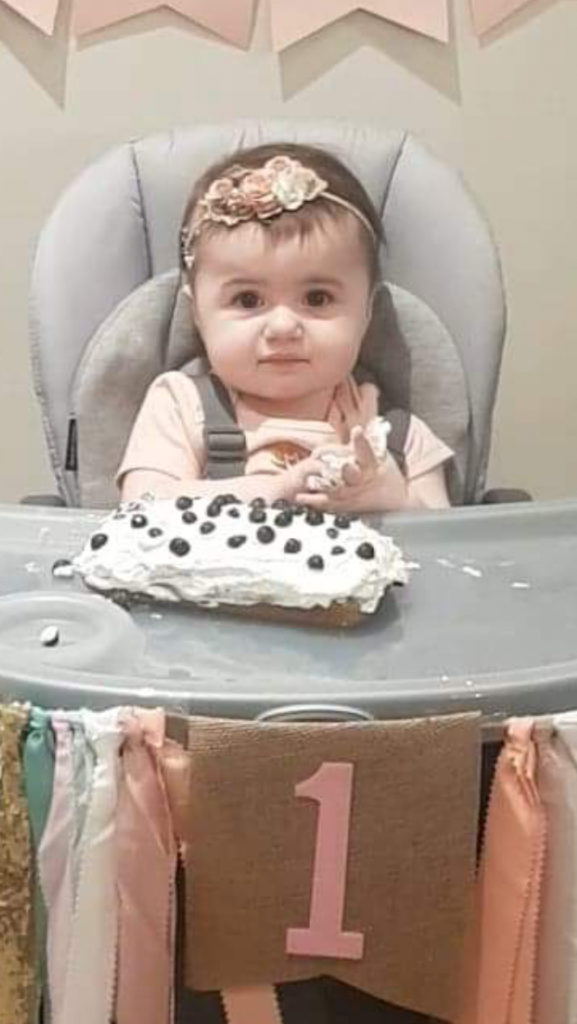
Welcome to a brand new month. Ah, sweet October: a time of thanksgiving, of pumpkins and spice and whatever else nice you can find to lighten your heart. For us it’s a list of family celebrations: the latest being this little twinkle who turned a whole year old yesterday.

Her brother opened her gifts for and with her, while Rob and I basked in sharing this special milestone. Happy Birthday, Sweet Jane. How lucky we are to be a part of your life. You really are a joy to be around – cheerful, chatty and charming just like your mom.

The living and dining areas in her parents’ home were decorated with streamers and ribbons all laid out for the Insta-moments to come. But Jane, still a little groggy from a shortened late-day nap, was more content just to chill and take it all in. After the presents, she was buckled into her high chair, sung to and presented with a small cake topped with whipped cream and sliced blueberries.

But Jane didn’t do the “cake smash” that is so big a part of many babies’ first birthdays; it was there for the mess-making but she just poked at the topping, tasted a berry or two and that was it.

Over at the grown-ups’ table, we had a delicious and decadent Oreo cake, but curiosity about the organic sugar-free cake Brooke had gone to such trouble to bake got the better of me. I broke off a small bite and put some in my mouth. My eyes wide, I turned to Brooke, sitting next to me and said, “You know I’ll eat anything, but this is garbage!”

We both burst into laughter, as Colin asked what was so funny. See, here it is: I’m usually really careful with my words and I’d never intentionally hurt Brooke’s feelings. She knows this well about me. But on the other hand, she ribs me mercilessly about the fact that I never met an expiry date I didn’t want to challenge to the death (likely mine, she fears). She’s adamant about counting down those numbers on packages like a NASA launch crew, whereas I take them very much as a…suggestion. And while we never argue, it’s quite likely we’ll never see eye-to-eye on it, so we do have numerous funny exchanges on the topic.

Brooke also marvels (or is it recoils) at how I will try just about any kind of food; she frequently teases me with her gagging sound effect when we’re talking about meal choices, menu items or taste preferences. It’s part of how we get along and we both laugh about it a lot. So it was last night that when I actually put something in my face that elicited that kind of almost real gagging response, we both burst out laughing.

The cake was more like Irish soda bread and without that topping (which cost Brooke a fingernail and could have caused more damage when she had a run-in with the electric beaters) it might have been wonderful with a stew or soup. It was made with the absolute best of intentions and so much love and care. And I know we’ll laugh about it for years to come – and *I* won’t be the one who brings it up!

Here’s to the memories, the laughter and the moments of outright silliness. Events never come off the way we hope they will (especially if babies are involved), but it’s the slip-ups that make them memorable and keep us smiling long after the banners have been taken down and the gift bags packed away. (Oh, that’s something else she teases me about: I’m the queen of hoarding and reusing gift bags!)

I love this.

I’ve also had quite enough birthday cake for a while. At least until Colin’s turn a week Sunday. Autumn has come packed in layers of love and celebration. I wish you a slice of the same.

——

And I will tell you that when news came last night of Chrissy Teigen and John Legend losing their son Jack at the halfway point of Chrissy’s pregnancy, I wrote about the bravery that they have shown in sharing their grief to help others. My comments didn’t fit with or within this journal, written on Jane’s birthday, but you are welcome to go to my Facebook page to read more, or to add your voice. E.

Rob WhiteheadThursday, October 1, 2020
read more

Monday, September 28, 2020

Just a thought… Be fanatically positive and militantly optimistic. If something isn’t to your liking, change your liking. [Rick Steves]

Well, what a weekend that was! Thanks to our Friday popcorn-and-movie night, and a PA day for Colin today, we had two little boy sleepovers with him, and on my birthday Saturday, a night at an inn for me and my bigger boy (that would be Rob). I’m feeling mellow and happy and grateful today and frankly, my friend, I don’t know what to do with it.

As we were walking through a beautifully treed area yesterday in Malahat, BC yesterday, the fragrance of the breeze and sunshine on trees and plants recently drenched in days of intermittent rain, I shared with Rob my quandary: I’ve lost my edge.

So why is that not a good thing? I feel that in writing here, I should be more than a big bowl of trifle every time you come to visit: more than fruit and cream and bits of cake, I should use this space to share more, do more.

All around me there is pain and uncertainty. Every feed is filled with angry, acerbic comments. People are suffering from insecurities of every kind as we watch and wait and wonder what a pandemic that never truly went away is going to do next.

The problem is that I’m too damned happy.

Paging Catholic guilt. Catholic guilt – line one, please…. 

I haven’t felt this joyful in five years and I’m not sure how to handle these feelings. I’ve never felt so out of step with humankind in my life. I know, I know: I’ve suffered deeply – we have – for the past five years, in the aftermath of a family tragedy that I don’t even have to name here any more.

The last time we were this blissful, the rug was pulled out from under our lives. As I told you in Mourning Has Broken, I felt as if somehow we deserved it; the Monkey’s Paw effect. It sounds insane, but in trying to find some logic in the enormity of our loss, I had to find a way to blame myself.

Enough time has passed, enough reading done and wisdom accrued that I know not to dread that the universe will tug it again; my job is simply to embrace each day and be joyful for the opportunities that it contains. Live in the moment.

But where does that leave you, my dear reader? I sometimes feel my writings or posts on FB sound as if I’ve been lobotomized (remind me not to watch the Nurse Ratched trailer again on Netflix). A few weeks ago, a Twitter account run by the alleged puppet comic Ed the Sock commented on one of my optimistic posts, saying that he liked that wisdom so much more when it was accompanied by the crispy fortune cookie it came in. Stupid, yes, but that hit home.

I didn’t respond to let him/it know that he/it had gotten to me, opting to block him/it instead, but it gave me pause. My lack of edge was obviously something that he/it found worth ridiculing and although I don’t agree, I get that.

My form of humour has always been not to ridicule (MAGA hat wearers notwithstanding) and hopefully to find more clever ways to be funny than through being mean. I’m not perfect, but I’ve tried. A sock with a cigar in its face (?) can’t be expected to buy what I’m putting out there. But why the follow on Twitter, “Ed,” darn you? (Now there’s some solid sock humour. Darning. Sock. Get it? Ugh. Sorry.)

Back in June when we learned that our Ottawa family – Phil, Brooke, Colin and Jane (whose first birthday is this Wednesday) – would be moving to within a six minute drive of us, I tried to assure both you and me that all of my posts wouldn’t be saccharine, family-related journals. Little did I know that I’d find myself in such a bubble of undiluted happiness, I’d be worried about seeming to be oblivious to suffering.

I will always believe that what we do, who we are, is a result of choices. Did we choose to lose our only child? Well, of course not. It feels ridiculous even writing that question. But how we chose to go on – that was our decision to make.

I never stopped hoping, believing in, writing and talking about joy. I knew it was ours for the taking in little bites, wherever we could find it. And now, when buffets are closed to help save us from a deadly virus, here I am with my plate so full I can barely carry it. What else am I to do when after a day of deluge, this rainbow behind me greeted us at dinner Saturday night?

So please bear with me while I figure out how to balance all of this. In the meantime, have some trifle. There’s no booze in it, but I’m better this way. And right now, it’s all-you-can-eat. Have a good week.

Rob WhiteheadMonday, September 28, 2020
read more